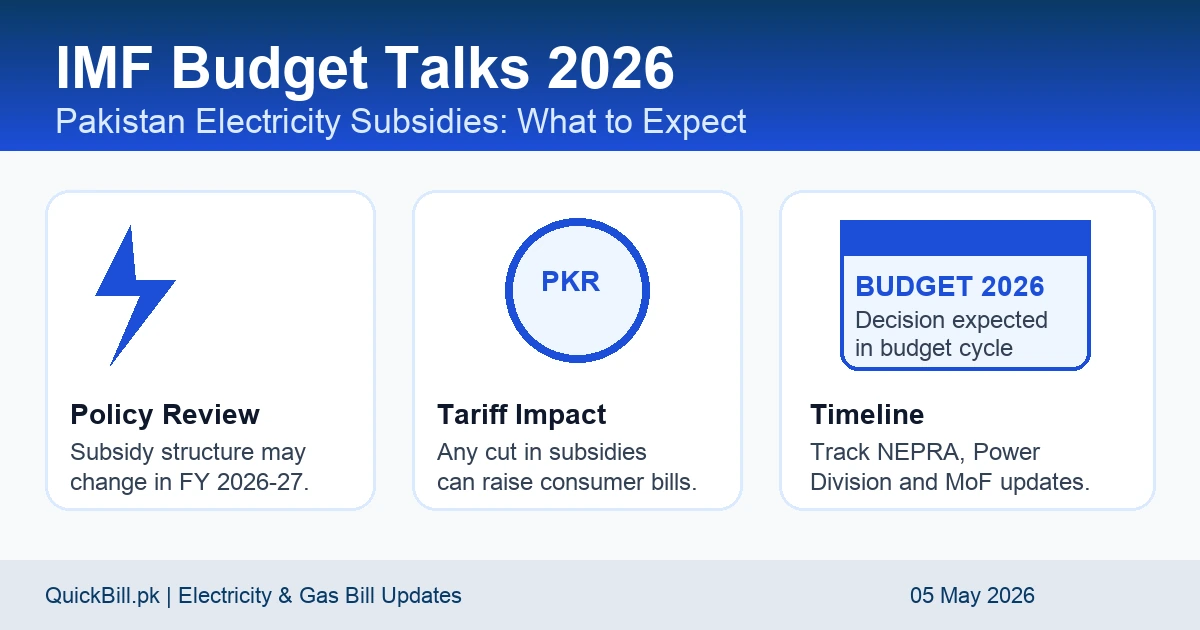
Updated: May 5, 2026. New media reports in Pakistan say the IMF has asked the government to avoid broad energy subsidies in the upcoming FY2026-27 budget and move further on tariff-linked reforms. For consumers, the key question is simple: will this raise electricity bills?
The short answer is: it can increase pressure on tariffs, but the final impact depends on the federal budget, NEPRA determinations, and how any targeted support is designed for vulnerable users.
What is being reported today?
Multiple local outlets reported on May 5 that IMF consultations for the next budget include pressure to avoid blanket fuel subsidies and tighten energy pricing discipline. Reported coverage includes Pakistan Point, Dunya News, and ProPakistani.
These reports align with the broader IMF reform direction seen in recent Pakistan programme documents and review statements, which repeatedly emphasize subsidy rationalization, tariff reforms, and circular debt control in the power sector.
What is confirmed from IMF-side documents?
In recent IMF programme communications on Pakistan, the policy direction has consistently focused on fiscal consolidation and energy-sector reforms, including stronger cost recovery and reducing distortions from broad subsidies. Useful references include the IMF Pakistan staff-level agreement update from March 2026 and recent country report material:
Important nuance: headlines may use stronger wording like “end all subsidies,” but policy outcomes are typically implemented through specific budget lines, tariff adjustments, and targeted support design rather than one instant switch.
What this could mean for your electricity bill
- Greater pressure to pass generation and system costs into tariffs over time.
- More focus on targeted relief instead of broad, across-the-board subsidies.
- Potential changes through fuel cost adjustment and future rebasing windows.
- Ongoing pressure to reduce circular debt, losses, and non-recovery in distribution companies.
For households, the practical step is to monitor your actual payable amount each month and track unit consumption trend. If your bill rises unexpectedly, compare your usage and tariff impact with QuickBill tools.
Start here:
- Electricity bill check pages
- Tariff comparison tool
- LESCO bill calculator and MEPCO bill calculator
- Appliance energy cost calculator
Bottom line
The latest reports suggest IMF-budget talks are pushing Pakistan away from broad subsidy models and toward tighter energy pricing discipline. Final budget measures are still policy decisions of the government and regulators, but consumers should prepare for a continued reform path in electricity pricing.
QuickBill is an independent utility bill information platform and is not affiliated with any government electricity company or regulator.
